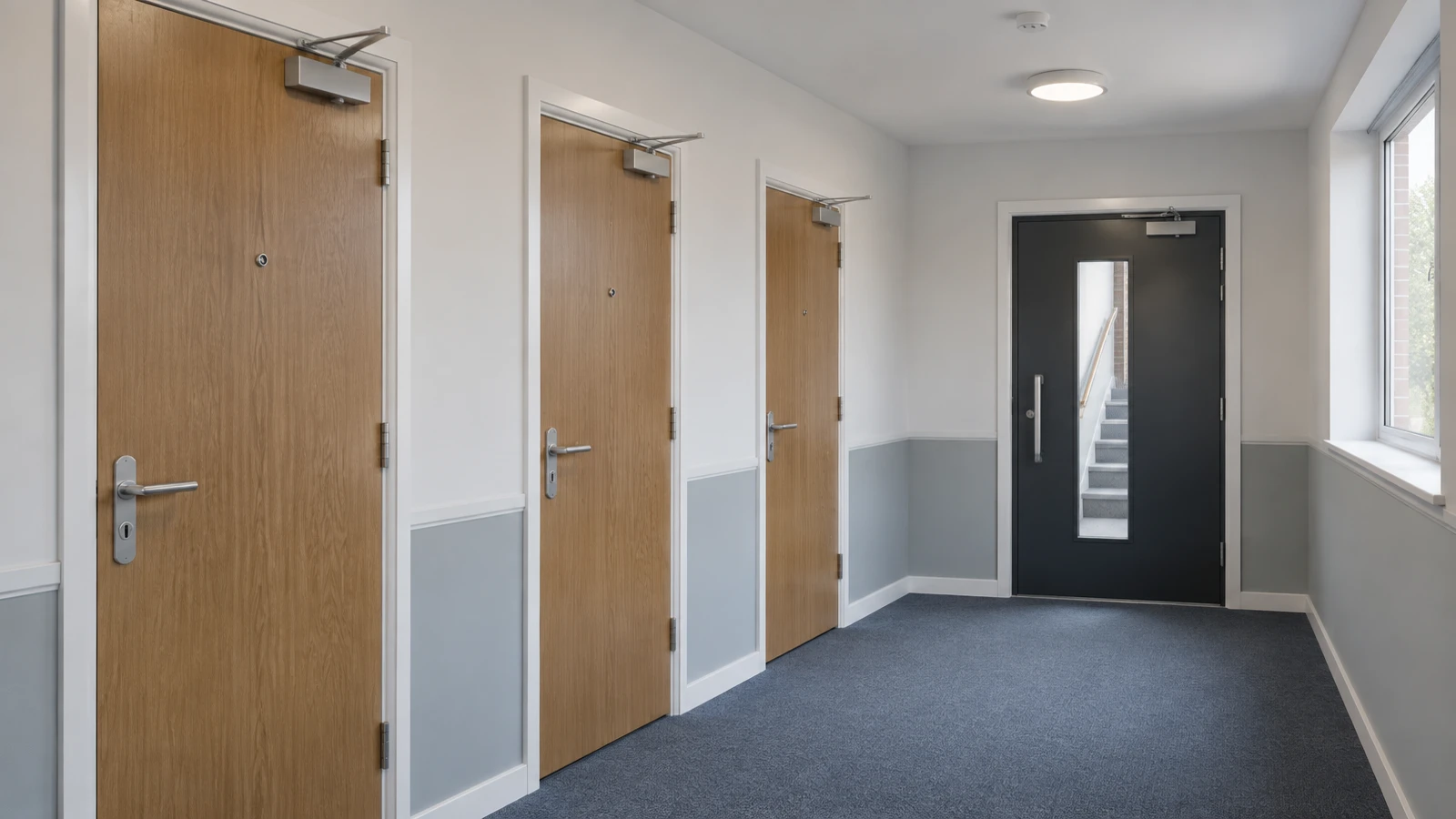
What to do when a resident won't let you check their fire door
Quick answer
You can't force entry, but you must use best endeavours to check every flat entrance door at least once every 12 months. Explain why the check matters, give written notice with a choice of times, try more than once and in different ways, and record every attempt. Government guidance says that if a resident persistently refuses, you might ultimately need to consider legal action.
In blocks of flats over 11 metres, most flat entrance door checks go smoothly. But some residents don't reply, aren't in, or say no. This guide explains what "best endeavours" means, a step-by-step approach that gets most doors checked, and the records that show you did all you reasonably could.
What "best endeavours" means
Regulation 10 treats flat entrance doors differently from communal doors. Communal fire doors must be checked at least every 3 months. For flat entrance doors, the duty is to use best endeavours to check each one at least once every 12 months, because you need the resident's co-operation to do it.
The law doesn't list what counts as best endeavours. The government's guidance says that where access isn't granted, the responsible person "should gather evidence of the steps they have taken to discharge this duty", such as correspondence asking the resident for permission, and that "in any cases when access to a flat was not granted, this must also be detailed." One letter is unlikely to be enough on its own.
A step-by-step approach
- Tell residents in advance. When you give residents their yearly fire door information, explain that the door will be checked every year and why: a working flat entrance door protects them and their neighbours.
- Send a letter with a date and time window, a way to rearrange, and your contact details. Explain that the check takes a few minutes at the door.
- Visit at the agreed time. If no one answers, leave a card with a new date and a way to get in touch.
- Write again, offering a wider choice of times, including evenings or weekends if you can.
- Try other contact methods, such as a phone call or email. For rented flats, contact the leaseholder or letting agent as well as the tenant.
- Send a final letter explaining the legal duty, how often you've tried, and what will happen next. Many leases include a covenant to give the landlord or management company access on reasonable notice to inspect. Check the lease before you rely on it.
- If the resident still refuses, take legal advice. The government's guidance says: "Ultimately, you might need to consider legal action if a resident persistently refuses to cooperate with these checks."
Common reasons for saying no, and how to respond
- Worry about cost. Some residents fear the check will lead to an expensive new door. Explain that the check is about whether the door works, and that the government's 2025 guidance says a missing certificate or missing seals doesn't on its own mean a door is unfit for purpose.
- Privacy or trust. Offer a booked appointment, tell them who will call, and carry identification. The check is done at the door.
- Not living there. If the flat is let or empty, contact the leaseholder.
- Needing support. Some residents may want a family member or carer present. Be flexible with times.
- A replaced door. If the leaseholder has fitted a new door, the guidance says they should confirm it's fire-resisting, was installed by a competent person, and give you the technical information about it.
What to record
For each flat, keep:
- the date and method of every attempt: letter, card, visit, phone call or email;
- copies of the letters you sent;
- what the resident said, if anything; and
- the outcome, including the date of the check once it's done.
Keep these records with the rest of your fire safety records. If the fire and rescue authority asks how you've met the duty, they're your evidence.
How Fire Door Check Log helps
Fire Door Check Log gives you access letters ready to print, records every attempt for every flat, and shows which flat entrance doors are still outstanding before the 12-month deadline. When a check is done, it's recorded against the same flat, so the whole history is in one place.
£99 per building per year, whatever the number of flats. See pricing
For printable checklists and an access log, download our free fire door checklists for blocks of flats.
Sources: Fire Safety (England) Regulations 2022: fire door guidance, Fact sheet: fire doors (regulation 10), The Fire Safety (England) Regulations 2022
Common questions
Can I force entry to check a flat entrance door?
No. The duty is to use best endeavours, not to force entry. If a resident persistently refuses, take legal advice on the lease and your other options. The government's guidance says you might ultimately need to consider legal action.
How many attempts count as best endeavours?
The law doesn't set a number. Several attempts, in different ways and at different times, each one recorded, is far stronger evidence than a single letter.
Does someone need to be in for a flat entrance door check?
Yes. Someone needs to open the door so you can check that it closes fully into its frame from different angles, and check the seals, hinges and any letterbox. It usually takes a few minutes.
What if the leaseholder has replaced the door?
Government guidance says the resident should confirm the replacement door is fire-resisting and was installed by a competent person, and give the responsible person the technical information about it.