Flat entrance door checks: how to show best endeavours
In blocks of flats over 11 metres, the responsible person must use best endeavours to check the entrance door of every flat at least once a year, and keep a record of the steps taken, including attempts to get in where residents didn't allow access. This guide explains what that means in practice and how to build a record that stands up.
What the law says
Regulation 10 of the Fire Safety (England) Regulations 2022 says the responsible person for a building with two or more flats that is above 11 metres in height “must use best endeavours to undertake checks of fire doors at the entrances of individual domestic premises in the building at least every 12 months”.
It also says the responsible person “must keep a record of the steps taken” to do this, “including in any case where access to the domestic premises was not granted during any 12 month period, the steps taken by the responsible person to try and gain access”.
Each check must include making sure the door's self-closing device works.
Why flat entrance doors matter
Most fires in blocks of flats start inside a flat. The flat entrance door stops fire and smoke spreading into the corridors and stairs that everyone else uses to escape, so it only works if it closes fully into its frame on its own.
What best endeavours looks like
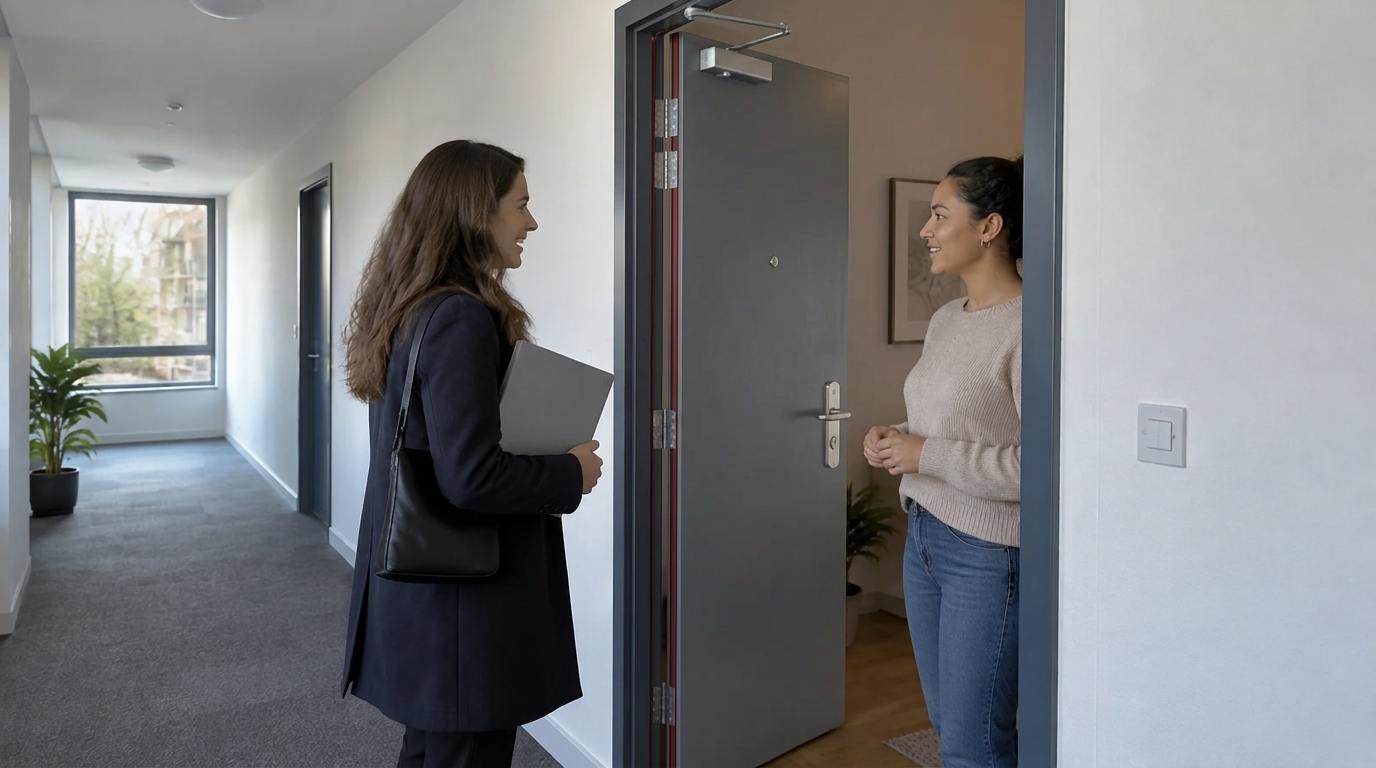
Government guidance suggests arranging checks with residents in advance and offering a range of times, so residents can be there. Other than in very small blocks, it's unlikely you'll check every door on one visit. A practical approach:
- Plan the year. Spread visits across the 12 months, so one missed appointment doesn't put you out of time.
- Write to every flat. Explain why the check matters and what it involves, and offer several dates and times, including some evenings or weekends.
- Follow up. Send a second letter to anyone who doesn't reply, and try email, a phone call or a note through the door.
- Involve landlords. If a flat is rented out, contact the leaseholder as well as the tenant. Check whether your lease gives a right of access on notice, and take advice before relying on it.
- Record every step: the date, how you tried and what happened.
- If a resident persistently refuses, the guidance says you might need to consider legal action. Take legal advice first.
Carrying out the check
You'll need to see the door from both sides, so you'll need to step just inside the flat. Check that:
- the door hasn't been replaced with one that may not be fire-resisting;
- any letterbox closes firmly and isn't jammed open;
- there's no damage or alteration to the door, frame or glazing;
- the hinges and other ironmongery have no obvious defects;
- any intumescent strips and smoke seals are undamaged and not painted over;
- the gaps are no more than 4mm at the sides and top; and
- the door closes fully into its frame from fully open and from about 15 degrees.
If a resident has replaced their door or added a letterbox, ask them to confirm it's suitable for a fire door and was fitted by a competent person, and for any technical information they have.
What to record for each flat
- the date of the check, who did it and what they found;
- anything that needs doing, and when it was repaired;
- if you couldn't get in, every step you took to try, with dates; and
- where access was refused or never arranged, that you've marked it as not granted for this year.
Who pays for repairs
It depends on the lease. Flat entrance doors are often part of the leaseholder's flat, but some leases make them part of the building. Check your lease, and take advice if it isn't clear. Either way, repairs must be carried out by a competent contractor as soon as reasonably practicable.
How Fire Door Check Log helps
Fire Door Check Log prints letters asking each resident for access, with your choice of dates and times, and a follow-up letter for flats that don't reply. It logs every letter, email, call and visit against each flat, records the checks you complete, and shows how many flats are checked, outstanding or not granted access. You can download the year's record as a PDF.
£99 per building per year, whatever the number of flats. See pricing
This guide is general information, not legal advice for your building.
Sources: Fire Safety (England) Regulations 2022, regulation 10; GOV.UK Fire Safety (England) Regulations 2022: fire door guidance
Common questions
What if a resident won't let us in?
Keep trying, and record every step: letters, emails, calls and visits, with dates. If a resident persistently refuses, government guidance says you might need to consider legal action. Take legal advice first.
Do we have to go inside the flat?
The door needs checking from both sides, so you'll usually need to step just inside the front door. The check is visual and only takes a few minutes.
Do we have to check every flat on the same day?
No. Government guidance says that, other than in very small blocks, it's unlikely all doors can be checked on one occasion. Each flat needs checking at least once every 12 months.
Is a letterbox a problem on a fire door?
Not if it's suitable for a fire door and closes properly. Check it closes firmly and isn't jammed open. If one has been added, the resident should confirm it's suitable and was fitted by a specialist.
How long should we keep the records?
The regulations don't set a period. Keep them with your fire safety records, and hand them over when directors or managing agents change.